Updated: 5/18/26
Yes, you can legally move to another state while on a Colorado workers’ compensation claim, but doing so drastically complicates your medical care and financial benefits. Here is exactly what you need to know and the traps you must avoid before you move.
Watch: Crucial Steps Before Moving Out of State on Workers’ Compensation
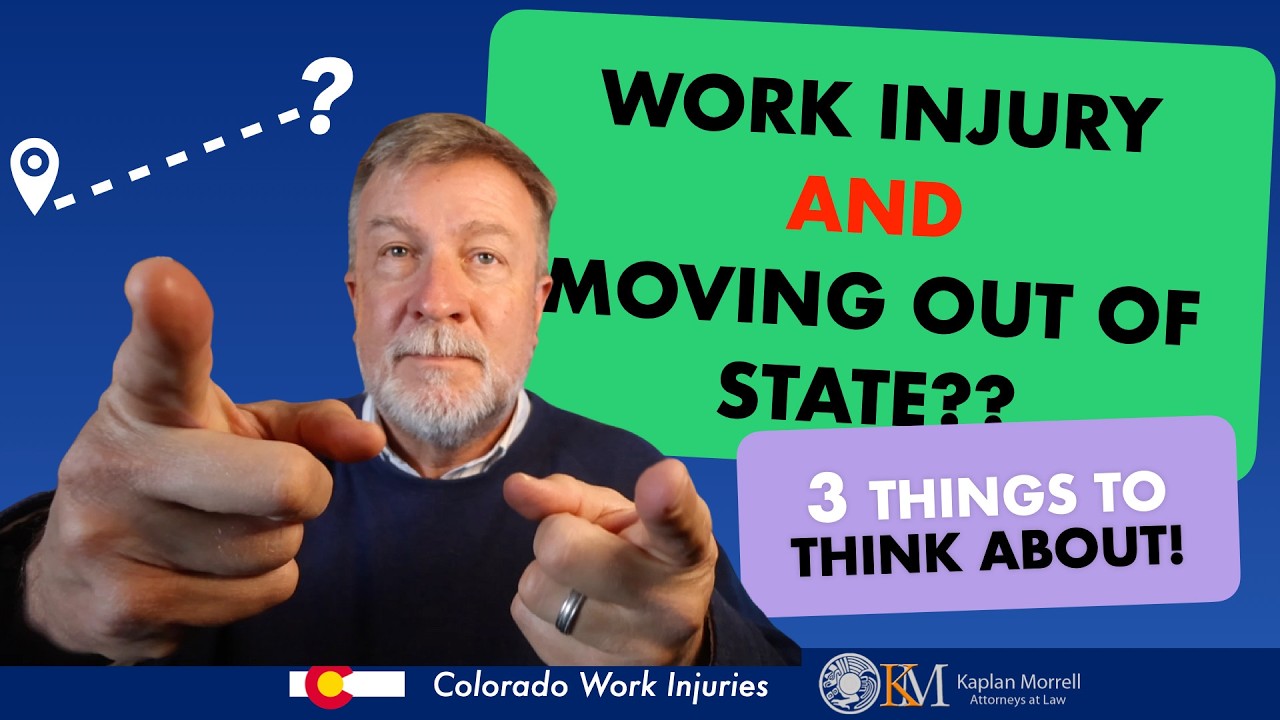
When you’re receiving workers’ compensation benefits and considering a move to another state, it’s crucial to understand the potential implications for your ongoing medical treatment and benefit payments. Before you make the move to another state, make sure your legal rights are fully protected. Request a free consultation with the Kaplan Morrell legal team.
There are 3 Challenges Workers face when moving out of state:
#1 How do you Continue Getting Your Medical Care?
The most significant immediate challenge when moving out of state is finding a way to continue receiving medical care.
Most hearings can be conducted virtually via Google Meet or Zoom, meaning you rarely have to travel back to Colorado for a court appearance. However, medical exams are a completely different story.
Colorado’s workers’ compensation laws require that your medical benefits continue, but the practical aspect of transferring care can be complex. Your claim remains under Colorado legal jurisdiction, which means you must carefully coordinate the transfer of your medical care to an out-of-state doctor who agrees to follow Colorado’s strict fee schedules and reporting rules. Failing to properly notify your insurance adjuster or missing a mandatory out-of-state medical evaluation can result in your benefits being suspended.
The insurance company has to pay for medical benefits regardless of where you are; in fact, the law requires that the insurance company notify you about the procedures for getting a new doctor when you move out of Colorado, but the real problem is finding a doctor who is both qualified and willing to take a Colorado workers’ compensation case.
Every state has its own workers’ compensation laws, fee schedules, and rules and regulations, so finding a new doctor can take some time, which could lead to a lapse in medical care. Maintaining compliance with your prescribed treatment plan is essential to ensuring that your benefits continue uninterrupted. This may involve coordinating care between your current providers in Colorado and potential new providers in your new state. But if you do need to find a new doctor, you have three options.
3 ways to find a doctor in your new state:
- Get a referral from your treating doctor in Colorado,
- Ask the insurance company to select the doctor for you,
- Choose your own if the insurance company fails to select one in time
#2 Lost Wage Benefits
Legal considerations and potential challenges
- Jurisdiction issues: Your workers’ compensation claim is governed by Colorado law, and moving to another state does not change the jurisdiction of your claim. However, logistical issues such as attending hearings or complying with specific procedural requirements may be complicated by your move.
- Potential impact on benefits: Depending on the specifics of your case and the state to which you move, there may be challenges related to the cost-of-living adjustments or changes in the availability of certain types of medical care, which could impact your benefits.
If you want to ensure uninterrupted benefits:
- Stay proactive in communication: Regular communication with your employer and their insurance carrier is key to managing your benefits effectively from out of state. Keep them updated on your contact information, medical care status, and any changes in your condition.
- Follow all prescribed treatments and evaluations: To avoid disputes about your benefits, adhere to all treatment plans and attend any required medical evaluations, even if it means traveling back to Colorado.
# 3 Getting Properly Evaluated for your impairment
⚠️ If your out-of-state doctor has never been trained in Colorado’s specific AMA impairment rating guidelines, they cannot legally assign your rating. You must be prepared to travel back to Colorado for a physical impairment evaluation, or risk having your permanent benefits decided by a state-appointed doctor who has never examined you in person.
Your impairment rating is a calculation of the loss of your body function. It’s based on the AMA Guides to Rating Impairment, and each state uses a different edition.
Under Colorado law, a doctor who hasn’t completed the Colorado accreditation course cannot complete an impairment rating, which means you may have to travel back to Colorado in order for your impairment rating to be calculated. You may be able to get your range of motion calculated out of state and have that information shared with a doctor back in Colorado, but you may still need to return to Colorado for all exams.
If the insurance company needs to bring you back for an evaluation, they will have to pay for your transportation and travel, but if you’re looking to challenge the impairment rating of the doctor or you want to get an evaluation with a doctor of your choice, you may have to pay for travel.
Finally, there is the added complexity of attending your hearings, but since most hearings can now be virtual, this is rare. Overall, you can of course move out of state while receiving workers’ compensation benefits, but there are some challenges you should be aware of.
What to do before moving
- Plan your medical care transition: Work with your current medical providers and adjuster to ensure a smooth transition of care to providers in your new state. This requires giving notice to the adjuster and securing referrals to new physicians who can manage your ongoing treatment.
- Consult with your workers’ comp attorney: An experienced workers’ compensation attorney can help navigate the legal and procedural nuances of moving while on workers’ comp. They can provide advice specific to your case and help ensure that your rights are protected throughout the process.
The Bottom Line on Moving Out of State
Moving to a new state does not mean you automatically forfeit your Colorado workers’ compensation benefits, but it does complicate your case. This is where having a great attorney who knows Workers’ Compensation law can help you!
If you have already relocated and need assistance with your workers’ comp claim, contact Kaplan Morrell to ensure your rights and benefits are fully protected, no matter where you live.
Other ways to connect with Kaplan Morrell Attorneys at Law
Facebook: facebook.com/KaplanMorrell
Instagram: @KaplanMorrellLaw
En Kaplan Morrell ofrecemos consultas gratuitas y hablamos español. https://kaplanmorrell.com/es/